
Trusted Platform Module (TPM) 2.0 is a hardware or firmware based security feature that is designed to provide a secure storage area for cryptographic keys and to facilitate secure boot and secure measurement processes. TPM 2.0 is an improvement over the previous version, TPM 1.2, and provides additional features and functionality. Windows 11 requires TPM 2.0 as part of Microsoft’s minimum system requirements. TPM 2.0 may be provided by a discrete TPM chip or through firmware-based TPM functionality supported by the system.
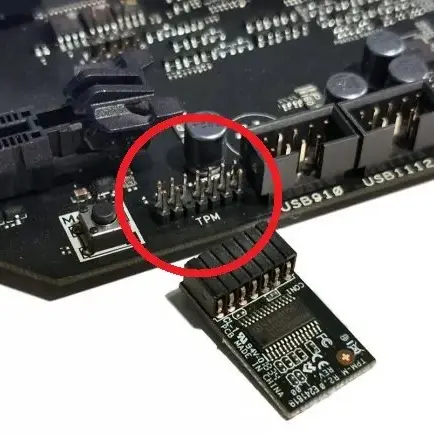
Hardware TPM 2.0
Hardware-based TPM 2.0 is a physical chip that is installed on the motherboard of a computer. Depending on the motherboard the TPM chip can either be soldered onto the motherboard or it can be a removable module plugged into pins on the motherboard. It is a dedicated microcontroller that is specifically designed to store and manage cryptographic keys and to perform cryptographic operations. Hardware-based TPM 2.0 has several advantages over firmware-based TPM 2.0. It is more secure because it is a dedicated chip that is isolated from the rest of the system, and it is less susceptible to software attacks. It is also more reliable because it is a separate component that is not dependent on the operating system or other software.
Firmware TPM 2.0
Firmware-based TPM 2.0 is a software implementation of the TPM 2.0 specification that is stored in the system’s BIOS or UEFI firmware. It is not a physical chip, but rather a set of instructions that are executed by the system’s CPU. Firmware-based TPM 2.0 has several advantages over hardware-based TPM 2.0. It is less expensive because it does not require a dedicated chip, and it is more flexible because it can be updated or modified through firmware updates. However, it is less secure than hardware-based TPM 2.0 because it is vulnerable to software attacks and it is dependent on the operating system and other software.
Bitlocker
BitLocker is a Windows drive-encryption feature designed to protect data from unauthorized access. Although TPM 2.0 is not required to use BitLocker, using BitLocker with a TPM provides additional security by securely protecting encryption keys and helping verify that the computer has not been tampered with while it was offline.
BitLocker supports both TPM 1.2 and TPM 2.0, although Microsoft recommends TPM 2.0. BitLocker can also be configured on computers without a TPM, but these systems require another method of startup authentication and do not receive the same preboot system-integrity verification provided by a TPM.
Conclusion
Trusted Platform Module (TPM) 2.0 provides hardware- or firmware-based security for cryptographic keys and other security functions. Windows 11 requires TPM 2.0, which may be provided by a discrete TPM chip or a compatible firmware-based implementation.
TPM can also work with security features such as BitLocker to provide additional protection for encryption keys and help verify system integrity during startup. While BitLocker does not require TPM 2.0 in every configuration, Microsoft recommends TPM 2.0 for modern Windows systems.
Contact Ram PC Systems for computers with TPM 2.0 and Windows 11 support.