
The world of technology is ever-changing, It’s getting harder and harder to source computers that have even 1 PCI slot, much less 2 or more. PCI express (PCIe) has taken the place of both PCI and AGP. Current Intel chipsets don’t even natively support PCI anymore. If you find a motherboard with PCI slots they are probably using a PCIe to PCI bridge.
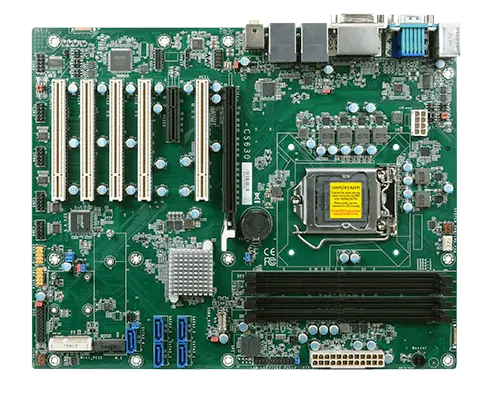
The good news is that if you need to replace a system that requires multiple PCI slots to run your hardware, there are still options available. We specialize in computers with PCI slots designed to support legacy PCI cards and specialized hardware.
History of PCI
Peripheral Component Interface (PCI) was developed in the early 1990’s and introduced by Intel in 1992 as a replacement for the ISA bus expansion slots. By 1996 PCI was adopted as the standard expansion slot and was typically seen on computer motherboards along side ISA until around 2000 when ISA slots were dropped by most computer and motherboard manufacturers. PCI offered several improvement over ISA such as greater data transfer speed and also plug and play capability. By the late 1990s, PCI had evolved further, with PCI 2.2 and PCI 2.3 introducing features such as better power management and 3.3V signaling. The early 2000s saw the introduction of PCI-X (PCI Extended), which increased bandwidth and clock speeds, making it ideal for high-performance servers and workstations. However, PCI-X remained a niche technology, and most systems largely continued using standard PCI slots.
PCI express slots were introduced in 2004 as a successor to PCI and at that time PCI was renamed Conventional PCI. Conventional PCI slots continued to be the most widely used expansion slot on computer motherboards until around 2010. Motherboard makers started putting less conventional PCI slots on their motherboards and by 2014 most motherboards had only 1 legacy PCI slots and some had none at all. PCI express is not backwards compatible, so if you have legacy conventional PCI devices and replacing them with PCI express versions is not possible because of cost or availability.
Native PCI Support
By the time the Intel Haswell CPUs came out native PCI support had all but disappeared from Intel’s chipsets. The new chipsets that support the socket 1150 and 1151 CPUs use a PCIe to PCI bridge to allow for a PCI slot on these newer motherboards. While the bridged PCI slots don’t seem to be a problem, there have been some cases where native PCI is a requirement.
Computers with Multiple PCI Slots
At Ram PC Systems we supply computers with multiple PCI slots. These industrial class systems are built for durability and their motherboards have long life roadmaps and will support your legacy hardware for years.